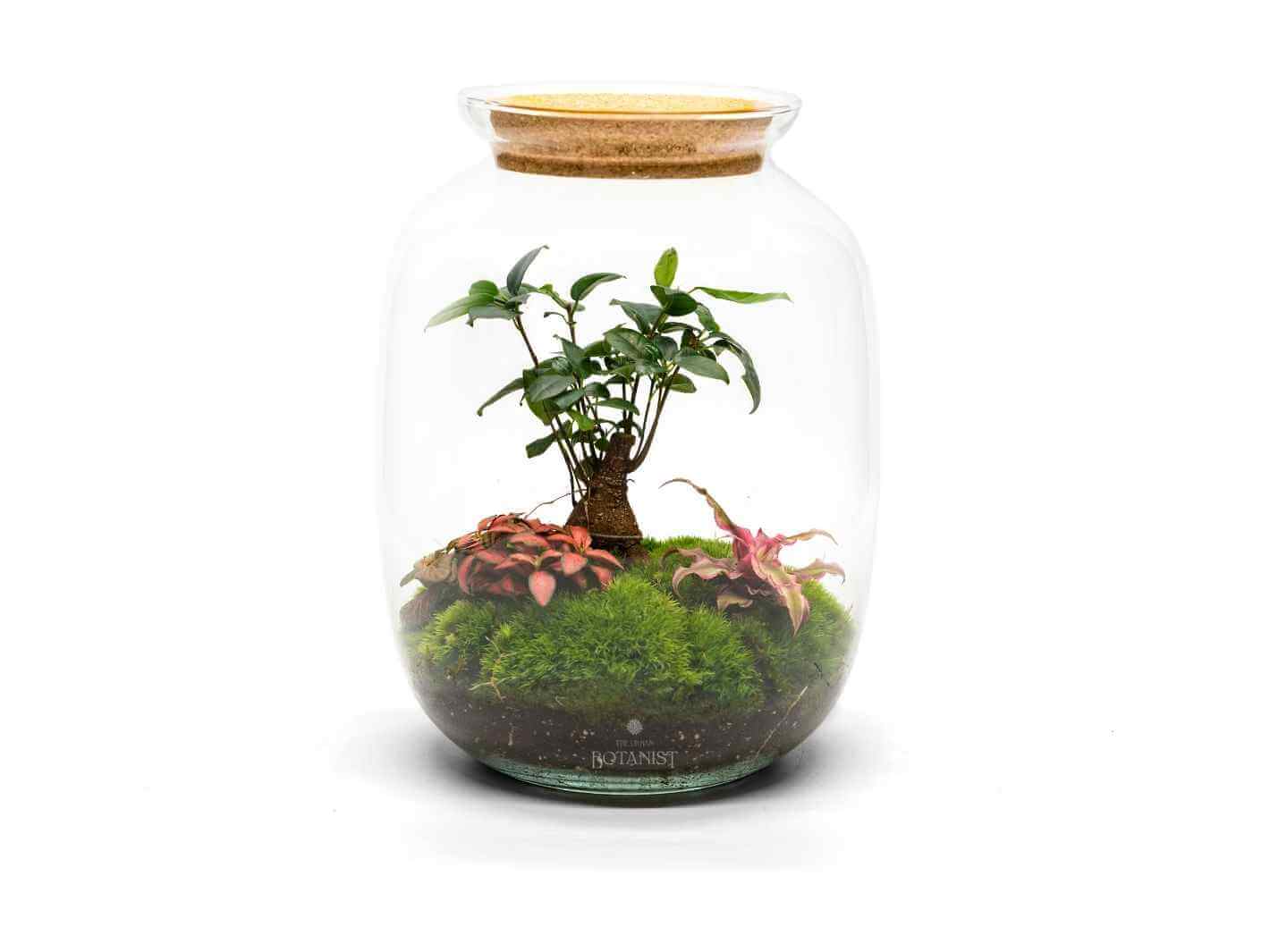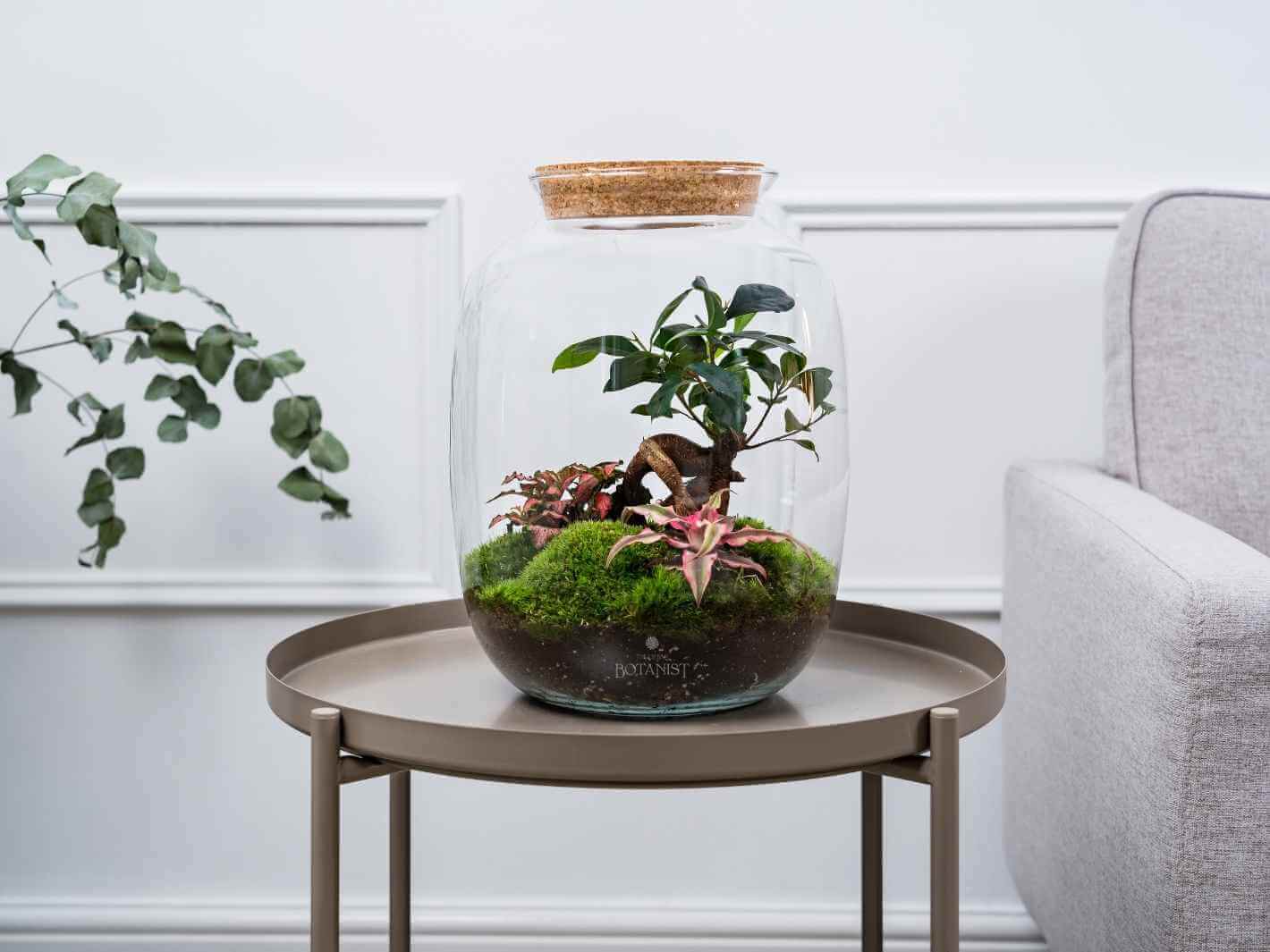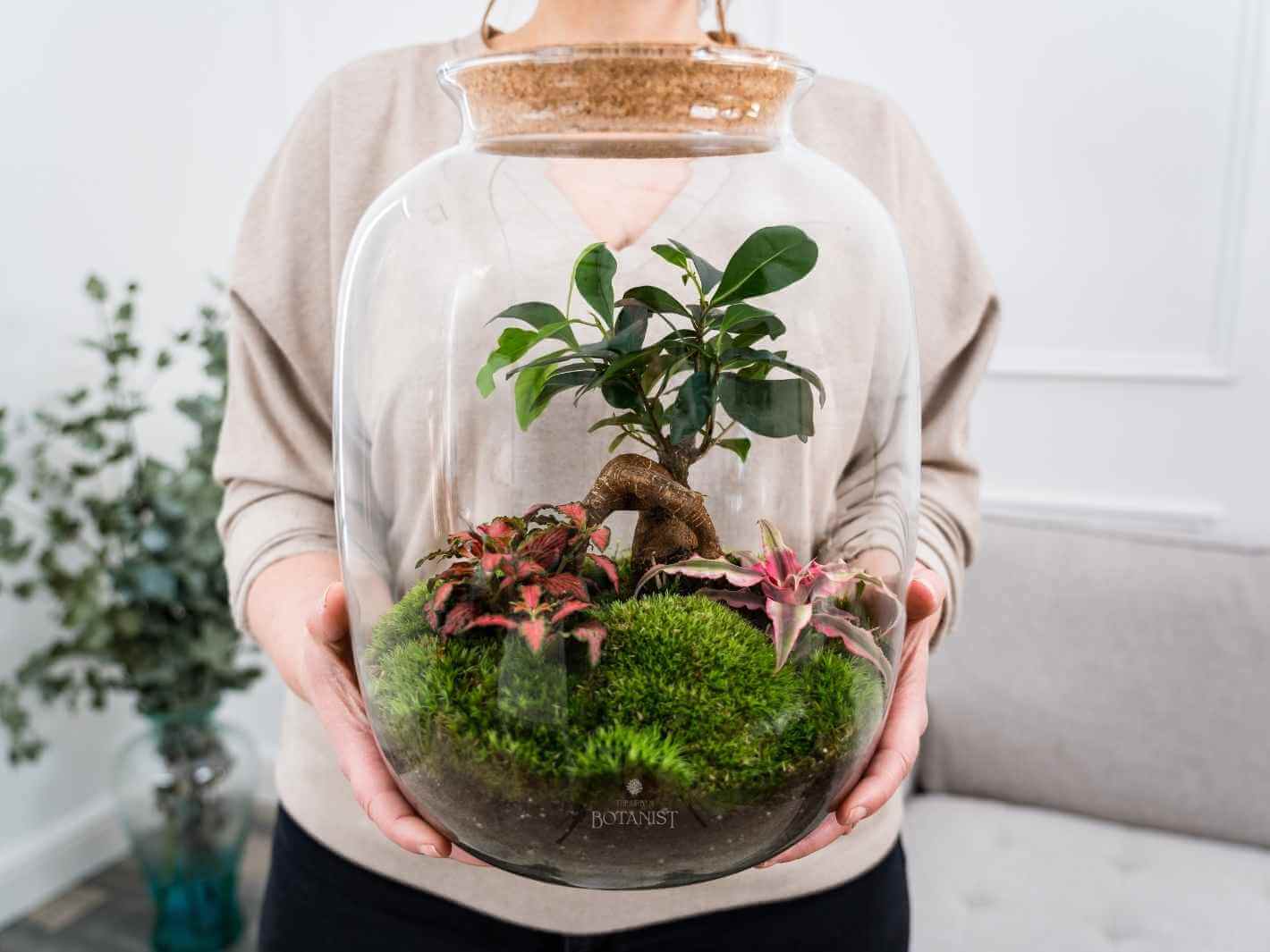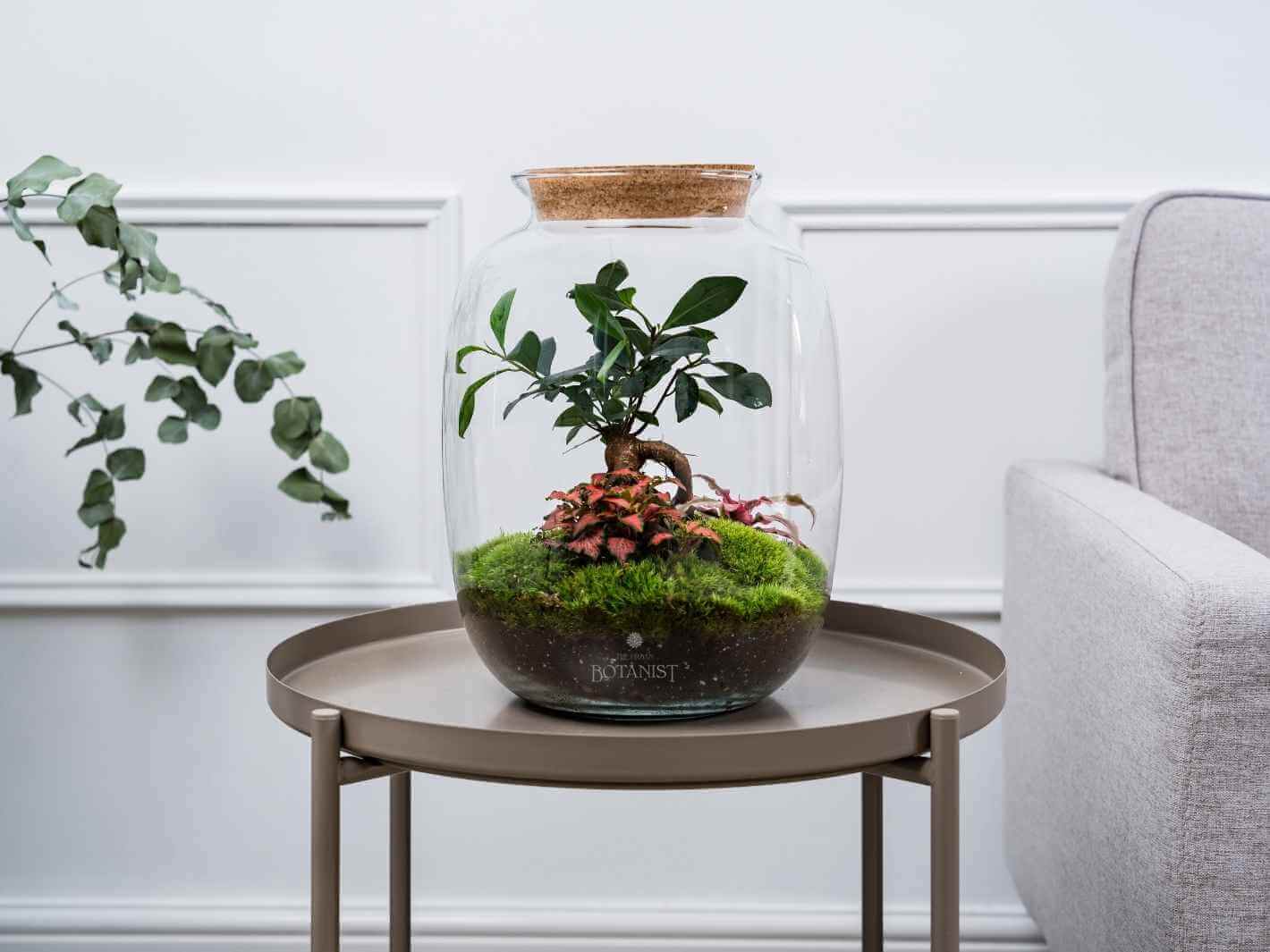


Terrariums are meant to be low-maintenance and that is part of the appeal. But 'low-maintenance' does not mean 'zero maintenance,' and one thing that surprises people is how, over time, plants quietly fill out and start to outgrow their space, especially if conditions are good. A plant that looked perfectly placed a few weeks ago is suddenly pressing against the glass, crowding its neighbours, or heading straight for the lid.
The fix is simpler than it looks. A bit of regular pruning keeps everything balanced, healthy and, honestly, looking much better than a terrarium left entirely to its own devices.
Why prning actually matters
It is tempting to think of pruning as purely cosmetic, but in a closed or humid environment it does a lot more than keep things tidy. Dense, overgrown plants trap moisture, reduce airflow, and create exactly the kind of conditions that mould and rot thrive in. Leaves pressed against the glass stay permanently damp. Plants shading each other out start stretching awkwardly towards the light. What began as a carefully designed miniature landscape quietly turns into a mess.
A well-timed trim prevents all of that. It also encourages plants to grow bushier rather than leggier, which almost always looks better in a terrarium setting.

When is the right time to prune?
You will usually know. The signs are hard to miss once you know what to look for.
Leaves touching the glass are one of the clearest signals. That contact keeps them wet for longer than is good for them, and yellowing or soft patches often follow. If smaller plants are starting to look pale and stretched, it usually means something bigger is stealing their light. Leggy growth in fittonia or trailing plants is another giveaway; the plant is reaching rather than filling out, which means it needs a pinch back, not more water.
Check underneath too. Yellowing leaves at the base of a plant, hidden beneath the canopy, are a sign that the lower growth is not getting enough light or airflow. And if your terrarium seems to be producing more condensation than usual, dense growth is often the culprit; it traps humidity and makes it harder for the whole system to breathe.
The best approach is little and often. A small tidy every few months is far less stressful than waiting until things have really got away from you, for the plants and for you.
As for timing within the day, try to prune during daylight hours when the terrarium is warm. It gives any cut stems a chance to dry slightly before the temperature drops in the evening. If you have a closed terrarium, leave the lid off for thirty to sixty minutes afterwards to let things air out.
What tools do you need?
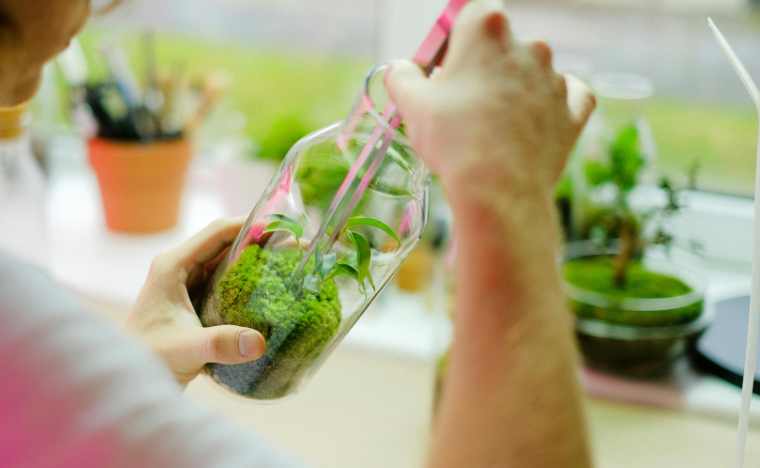
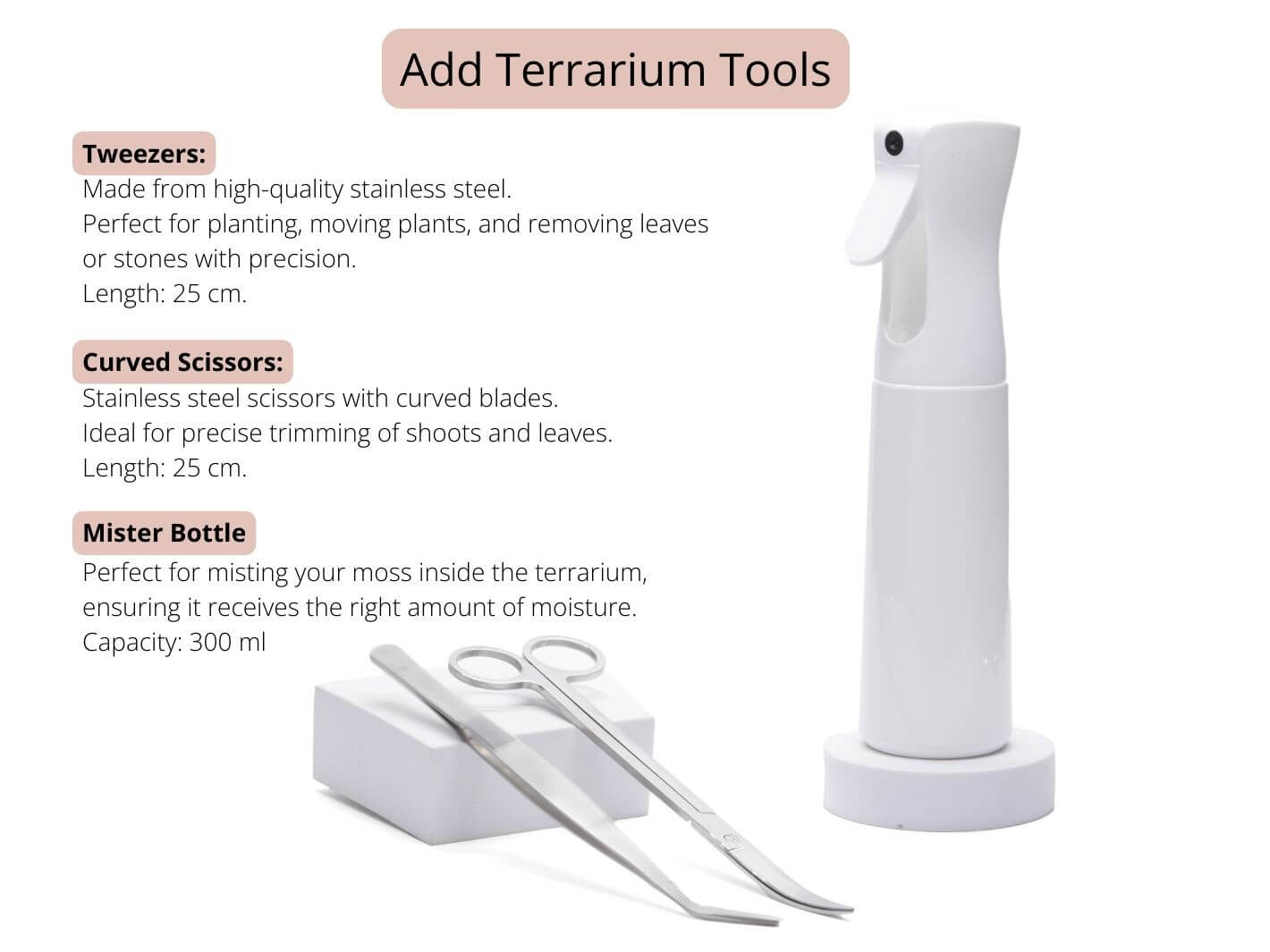
Nothing specialist is needed, but the right tools make a real difference. Curved scissors are particularly well suited to terrarium work, the angled blade lets you reach awkward spots and trim close to the soil without disturbing the plants around them. A pair of tweezers and some bonsai snips round out the kit nicely.
Give your tools a quick clean before and after as in an enclosed environment, bacteria and fungus spread more easily than in an open pot, and it takes seconds.

The essentials: curved scissors, tweezers, and a misting bottle, everything you need to keep your terrarium in good shape.
How to prune your terrarium, step by step
Start with a plan. Before you reach for the scissors, look at the terrarium from the front, the angle you actually see it from day to day. Which plants are the focal point? Which ones are taking up more space than they deserve? A quick photo before you start is surprisingly useful; it helps you spot what is genuinely too big, and it makes for a satisfying before-and-after.
Remove anything unhealthy first. Yellow leaves, soft or mushy growth, anything sitting wet against the glass as these come out before you do any shaping. Use tweezers rather than your fingers where you can, and make sure every bit of removed material comes out of the terrarium completely. Clippings left behind break down fast and are a reliable way to end up with mould.
Trim for shape, not just length. Rather than cutting back only the longest stems, work lightly across the whole plant to keep an even, compact form. For Fittonia, pinch or snip just above a leaf node as this encourages it to branch and fill out rather than just get shorter. For ferns, remove older fronds from the base if they are taking up too much room, but resist the urge to chop the top off randomly; it rarely looks good. For moss, thin out any areas that have become too thick or soggy, and replace visibly browned patches if needed.
One rule worth keeping: cut a little, then stop and look. You can always take more off. You cannot put it back.
Tidy up before you close the lid. Remove every loose leaf and scrap of clipping, give the inside of the glass a quick wipe if there is debris, and use tweezers to reposition any stems that have shifted. If the terrarium looks a little sparse after pruning, that is completely normal, most plants fill back in quickly, and the extra space and airflow will do them good.
Aftercare
Pruning changes the moisture and airflow balance inside your terrarium, so keep an eye on things for a few days afterwards.
For closed terrariums, leave the lid off for a short while after pruning and watch the condensation levels over the next couple of days. If the glass is staying fogged up throughout the day, the terrarium is likely too wet, leave the lid off for a few hours until it clears.

Mistakes worth avoiding
Cutting too much in one go is probably the most common. A heavy prune can shock plants, especially in a humid environment, gradual is nearly always better.
Leaving clippings inside is an easy one to overlook in the moment, but they break down fast and create the ideal conditions for mould. Get everything out.
Blunt or dirty scissors do more damage than people realise. Crushed stems heal poorly, and dirty blades can carry disease from one plant to another.
And finally, if your plants keep coming back leggy no matter how often you trim them, the issue is probably light rather than growth rate. Pruning treats the symptom; the right light conditions treat the cause.
A few common questions
How often should I prune?
Every 2-3 months is a sensible rhythm for most terrariums, though fast-growing plants like Fittonia may need attention more often during the growing season.
Can I use the cuttings?
Often yes. Healthy fittonia cuttings root easily in damp moss or soil. Just make sure you are taking cuttings from strong growth, not from anything that was already struggling.
There's mould after pruning, what do I do?
Remove the affected material straight away, open the terrarium to ventilate, and reduce moisture levels. Mould after pruning usually means the environment was already quite wet, and the disruption tipped the balance. Better airflow and a lighter hand with watering will usually sort it out.
Regular pruning is one of the simplest things you can do to keep a terrarium looking its best and functioning properly. A few careful snips every now and then makes a real difference. The difference, often, between a thriving miniature ecosystem and a glass jar that has quietly got out of hand.
For more terrarium care guides, take a look around our blog. And if you are thinking about starting your own, browse our range of DIY Terrarium Kits and ready-made terrariums, with FREE standard delivery on orders over £50.